
In 2024, online store owners are expected to strike a balance between technological innovation and regulatory compliance, with a growing emphasis on making websites accessible to all users. This makes understanding Americans with Disabilities Act (ADA) compliance more important than over.
In the context of online stores, Shopify ADA compliance includes adhering to guidelines and standards set in 1990. ADA laws prohibit discrimination against individuals with disabilities and mandate equal access to goods and services, including those offered digitally.
While the ADA does not explicitly outline rules, the Web Content Accessibility Guidelines (WCAG) have become the global standard for creating accessible websites and online stores.
Let’s dig deeper into this topic and learn how to achieve Shopify ADA compliance easily.
The Importance of ADA Compliance for Online Stores
The significance of ADA compliance for online stores goes beyond mere legal obligations. In an era where digital presence is a cornerstone of business success, an accessible website is a prerequisite for reaching a broader audience and maximizing customer engagement.
Failure to meet ADA standards exposes businesses to potential legal action and risks alienating a significant portion of the market. Recognizing the importance of accessibility is not just about avoiding legal repercussions; it is about fostering an inclusive and ethical online environment.
Shopify, a leading e-commerce platform, has been actively working to enhance the accessibility of its services. As of 2024, Shopify provides various tools and features to help owners create ADA-compliant online stores.
Shopify ADA Compliance: Everything You Need to Know
Shopify recognizes the importance of creating an inclusive digital environment. In alignment with ADA principles, the platform offers various tools and resources that empower online store owners to build accessible websites for a diverse audience.
Accessible Themes and Templates
Shopify offers a range of themes and templates designed with accessibility in mind.
These themes often include features that facilitate navigation for individuals using screen readers, ensuring proper contrast ratios for readability. They also support the implementation of other best practices outlined in the WCAG.
App Store Guidelines
Shopify’s App Store has guidelines to encourage app developers to prioritize accessibility when creating applications for the platform. This ensures that third-party apps, commonly used to extend the functionality of Shopify stores, also contribute to the overall accessibility of the online shopping experience.
However, the accessibility of third-party apps can vary. Store owners should exercise caution when selecting apps and thoroughly review their accessibility features.
Customization Challenges
The nature of e-commerce often demands a high level of customization for individual brands. However, excessive customization can sometimes lead to unintentional accessibility issues.
Striking a balance between a visually appealing storefront and an accessible design can be challenging, and store owners should be mindful of the potential impact of customization on ADA compliance.
Essential Tips for Shopify ADA Compliance
Accessibility compliance can be challenging to achieve, especially if you are just starting. Here are some tips to help you out:
Choose Accessible Themes
When selecting a Shopify theme, prioritize those that explicitly mention adherence to accessibility standards. Look for themes that provide clear documentation on accessibility features, including compatibility with screen readers, keyboard navigation, and color contrast ratios.
Consider using the Shopify Theme Store filters to identify themes with built-in accessibility features. Some popular ADA-compliant themes include Debut, Brooklyn, and Minimal. However, it’s essential to stay informed about theme updates and ensure that your chosen theme remains compliant with the latest accessibility standards.
Select Accessible Apps
When integrating third-party apps into your Shopify store, thoroughly evaluate the accessibility features of each app.
Reach out to app developers to inquire about their commitment to accessibility and whether their products undergo regular testing for compliance. As a rule of thumb, prioritize apps with a transparent approach to accessibility and a commitment to ongoing improvements.
You can also explore the Shopify App Store for apps that explicitly address accessibility concerns. Look for apps that provide alt text capabilities for images, maintain compatibility with screen readers, and adhere to WCAG guidelines.
Apps, such as Easy Image Optimizer, Accessibility Enabler, and Accessibly, are known for their focus on improving website accessibility.
Pick a Simple Design
While customization is key to establishing a unique brand identity, it’s crucial to balance design choices with accessibility considerations.
Avoid design elements that could impede navigation for users with disabilities, such as overly complex layouts or color schemes with low contrast. Always prioritize clarity and simplicity to enhance the overall user experience.
Conduct Accessibility Audits
You should also conduct regular audits and testing for Shopify ADA compliance. Utilize online accessibility checkers to assess your website against WCAG guidelines. The best options include:
- Accessibility Spark
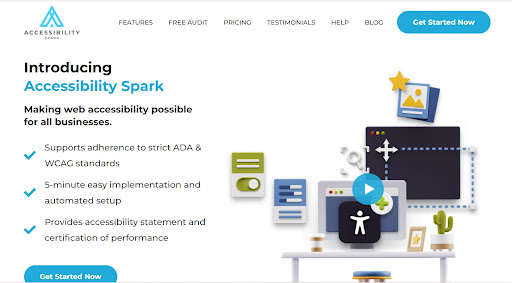
Accessibility Spark is an easy-to-use platform that ensures an online store or website is ADA & WCAG-compliant. Whether you’re a beginner or a pro, it only takes 5 minutes to implement and automate the setup.
The platform accesses your website thoroughly and gives you a detailed accessibility statement and performance certification. Not only that, you will also have suggestions for improvement. All you have to do is accept them and ensure accessibility compliance in a few minutes.
- WAVE (Web Accessibility Evaluation Tool)
WAVE is a suite of evaluation tools that help authors make their web content more accessible. The platform empowers Shopify store owners with real-time accessibility insights.
Designed by WebAIM, WAVE offers a user-friendly interface, providing immediate visual feedback on potential issues directly within the webpage. It also generates in-depth reports categorizing problems by severity for quick improvements.
Though not a direct Shopify integration, WAVE assesses any website, including Shopify stores.
- Axe Accessibility
Developed by Deque Systems, Axe is an open-source browser extension that automatically scans your website for common accessibility issues. It provides detailed reports on the problems detected and recommendations for improvement.
The platform seamlessly integrates into the Shopify store. Axe ensures a user-friendly approach for store owners. As a community-driven tool, it stays updated with evolving accessibility standards, empowering Shopify merchants to enhance their online stores efficiently and create more inclusive shopping experiences.
- Google Lighthouse
Google Lighthouse is an open-source, automated tool for improving the quality of web pages. It has audits for performance, accessibility, progressive web apps, SEO, and more. It can run in Chrome DevTools or from the command line for Shopify stores.
Lighthouse evaluates many accessibility aspects like color contrast and semantic HTML. Beyond accessibility, it provides a holistic performance assessment, ensuring well-rounded optimization.
- SortSite
SortSite is a website testing tool that web developers use for usability, accessibility, and search engine optimization (SEO) checks. It helps identify and fix web accessibility issues on your site.
The platform aids Shopify store owners in comprehensively optimizing their websites. Beyond accessibility, SortSite generates detailed reports with prioritized recommendations for improvement, empowering merchants to enhance their Shopify websites efficiently.
- Level Access
Level Access is an automated accessibility testing tool that provides insights into potential issues on your website. It supports integration into development workflows and can be used for ongoing monitoring.
Its detailed reports provide actionable insights, aiding store owners in continuously improving Shopify ADA compliance. As a vital tool, Level Access enables merchants to create and maintain accessible online stores, contributing to a positive and inclusive digital environment.
Remember that ongoing vigilance and testing are essential, especially when updating or adding new content to your online store.
Training and Awareness for ADA Compliance
Your store staff and customers must be trained and aware of Shopify ADA compliance before you go this way. Here is how you can do that:
Educating Team Members
Provide training to your team members on the fundamentals of ADA compliance. This includes an overview of crucial accessibility principles, the importance of inclusive design, and the potential consequences of non-compliance.
Offering resources, such as webinars, online courses, or documentation, can empower them to ensure accessibility compliance without hassle.
You must also educate them about the best practices for maintaining Shopify ADA compliance. This includes staying informed about updates to accessibility standards, regularly auditing their websites, and making informed decisions when selecting themes and apps.
Customer Education on Accessibility Features
Communicate your store’s commitment to accessibility on the website. Provide information about the steps to ensure ADA compliance, including using accessible themes, apps, and ongoing testing procedures.
Transparency builds customer trust and reinforces your dedication to creating an inclusive shopping environment. You should also develop user-friendly guides or documentation for customers who may benefit from accessibility features.
Provide information on adjusting settings for better readability, navigating the site using assistive technologies, and accessing alternative content. Don’t forget to make these guides easily accessible within the website’s help or support section.
Staying Informed About ADA Updates
ADA compliance is an evolving landscape, and staying informed about regulatory changes is crucial. Regularly monitor updates to ADA guidelines, WCAG standards, and any legal precedents related to online accessibility.
You should also subscribe to newsletters, join forums, or engage with accessibility communities to stay abreast of the latest developments.
The key is to embrace industry trends related to e-commerce accessibility. As technology evolves, new tools and techniques may emerge to enhance accessibility. Proactively adopting these advancements ensures that your Shopify store remains at the forefront of accessibility, providing an optimal user experience.
ADA Compliance: Positive Outcomes for Online Stores
Some benefits of ADA compliance for online stores include:
- Enhanced User Engagement: ADA-compliant Shopify stores often report increased user engagement. By catering to a broader audience, including individuals with disabilities, your store creates a positive online environment that fosters inclusivity and a sense of belonging.
- SEO Benefits: Improved website accessibility positively influences search engine optimization (SEO). Search engines prioritize accessible websites, considering factors such as text alternatives for images and proper heading structures. ADA compliance, therefore, contributes to better visibility in search engine results.
- Customer Trust and Loyalty: Prioritizing accessibility builds trust with customers. When individuals with disabilities have a seamless and enjoyable shopping experience, they are more likely to become repeat customers.
Remember, positive word-of-mouth and online reviews can enhance your store’s reputation, and ADA compliance is here to help you.
Future Trends in Shopify ADA Compliance
As technology evolves, Shopify is expected to introduce updates and features that further enhance ADA compliance. Here are some trends to look up to:
New Shopify Accessibility Features
Keep an eye on official announcements and release notes from Shopify to stay informed about improvements related to accessibility. This may include updates to built-in themes, new accessibility tools, and guidelines for app developers.
Automated Accessibility Testing
Anticipate advancements in automated accessibility testing tools integrated into the Shopify platform. Automation can streamline identifying and addressing accessibility issues, making it easier for store owners to ensure ADA compliance.
Rise of AI-Powered Accessibility Solutions
Expect the emergence of AI-powered solutions designed to enhance accessibility in e-commerce. These solutions may include AI-driven chatbots for customer support, voice-activated interfaces, and personalized accessibility settings that adapt to individual user needs.
Collaboration Between Platforms and Accessibility Organizations
Look for increased collaboration between e-commerce platforms like Shopify and accessibility organizations. These partnerships can lead to the development of standardized tools and resources that benefit the entire e-commerce industry.
AR and VR for Inclusive Shopping Experiences
Explore the integration of Augmented Reality (AR) and Virtual Reality (VR) technologies to create more inclusive shopping experiences. These technologies can provide unique solutions for individuals with disabilities, allowing them to explore products and make informed purchasing decisions virtually.
Voice Commerce Integration
With the growing popularity of voice-activated devices, anticipate the integration of voice commerce features into e-commerce platforms. This trend can significantly benefit users with mobility or visual impairments by enabling them to navigate and purchase using voice commands.
Staying abreast of these future trends will empower Shopify store owners to adapt to the evolving landscape of ADA compliance proactively.
Conclusion
As online commerce continues to thrive, prioritizing Shopify ADA compliance in 2024 is paramount for online store owners. The landscape of e-commerce accessibility is evolving, and adherence to the principles of the ADA is not just a legal necessity but a pathway to a more inclusive and successful business.
By understanding the ADA requirements, leveraging Shopify’s commitment to accessibility, and implementing essential tips, store owners can create online spaces that cater to users of all abilities.
Remember, accessibility compliance requires ongoing efforts in testing, training, and staying informed about ADA updates. We hope this guide will help you contribute to a positive and inclusive online shopping experience.